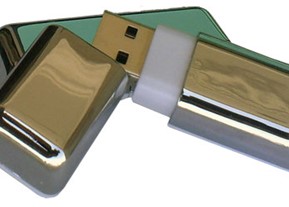


A security token is a device used to authenticate users for access to virtual environments. Modern tokens, in addition to authentication, perform encryption operations and secure key storage.
Security Token and the Necessity of Its Use The term “Security Token” has been added to the computer vocabulary in recent years. If you search for the word “Token” in older dictionaries, you will find meanings such as sign, mark, characteristic symbol, etc. However, today it refers to hardware used for authentication in virtual environments. This article aims to provide a general overview of security tokens and the necessity of using them.
The Weakness of Traditional Passwords Before discussing tokens, it is necessary to briefly mention authentication systems. Consider a standard email login system that requires a username and password. The entire security of access relies solely on the password. While passwords are a simple and widely used concept for accessing personal environments, a little reflection reveals that they cannot maintain a high level of security. Major disadvantages of passwords include:
- Loss of Control: Once a password is given to a user, verifying its integrity is difficult because users may share it, write it down to prevent forgetting, or store it in insecure places.
- Simplicity: Many passwords are too simple and easily guessable.
- Eavesdropping Risks: Passwords are often transmitted over insecure communication channels to remote servers, making them vulnerable to interception. For example, when logging into a website, credentials might be sent without encryption, exposing them to eavesdropping at various points between the user and the server.
- Detection Difficulty: It is often difficult, if not impossible, for a user to know if their password has been stolen. Similarly, the server cannot easily distinguish between a legitimate user and an unauthorized intruder.
- Compromised Trust: Once a password is stolen, the entire trust chain breaks. The process of re-identifying the real user, changing the password, and restoring data to the pre-theft state is complex and time-consuming.
These problems stem from relying on a single entity (the password) for authentication. The solution to this security weakness is to use multiple security factors instead of one. Two-Factor Authentication (2FA) or Multi-Factor Authentication (MFA) can be effectively implemented using security tokens.
Two-Factor Authentication (2FA)
As the name implies, Two-Factor Authentication uses two different factors to verify a user’s authorization. The idea is that the more independent identification factors used, the more reliable and lower-risk the operation becomes. The concept is simple: the system does not rely on just one factor (e.g., a password) but requires a second factor. Consider an ATM card: a bank customer needs both a card (physical possession) and a PIN (knowledge) to perform transactions. The ATM will not respond to a user who has only one of these factors.
Authentication factors are categorized into three types:
- Something you know: (e.g., a secret, password, PIN).
- Something you have: (e.g., Passport, ID Card, Security Token).
- Something you are: (e.g., Biometrics, Fingerprint).
Any combination of two of the above factors creates a robust framework for Two-Factor Authentication. For example, combining a PIN (knowledge) with a Security Token (possession) implements a relatively secure 2FA system. This allows a user to access their personal environment, update data, or issue commands without worrying about security breaches.
Note on Strong Authentication: Using more than one factor is sometimes mistakenly called “Strong Authentication.” Technically, Strong Authentication refers to a method where one of the identification factors involves a challenge-response mechanism, often repeated multiple times to verify identity.
While 2FA significantly reduces the risk of online identity theft and security vulnerabilities, systems based solely on it may still be vulnerable to Man-In-The-Middle (MITM) attacks. Therefore, securing the communication channel (e.g., using SSL/TLS) is essential.
What is a Security Token?
A Security Token (also known as a Hardware Token, Authentication Token, USB Token, or Cryptographic Token) is an electronic device that proves a person’s identity electronically through Two-Factor or Multi-Factor Authentication mechanisms, without the user needing to understand the complexity of the authentication process.
In essence, a security token is a powerful electronic key for entering virtual environments.
Key Features:
- Portability: Small and easy to carry for users.
- Functionality: Capable of performing encryption, identity verification, and storing cryptographic keys and biometric data (such as fingerprints).
- Processing Power: Electronic security tokens are equipped with internal memory and a powerful processor. They connect to a computer (usually via USB port) and, through specialized software, execute encryption and user identification operations with high speed and ease of use.