

Metal Detector
"Installed on the production line, the industrial metal detector system detects metal contaminants within passing products, facilitating the separation process."
"Production line instrumentation and control systems, such as industrial metal detectors, enhance product quality and productivity throughout the entire manufacturing process. Furthermore, they significantly reduce overhead costs associated with production line damage and improve safety standards."
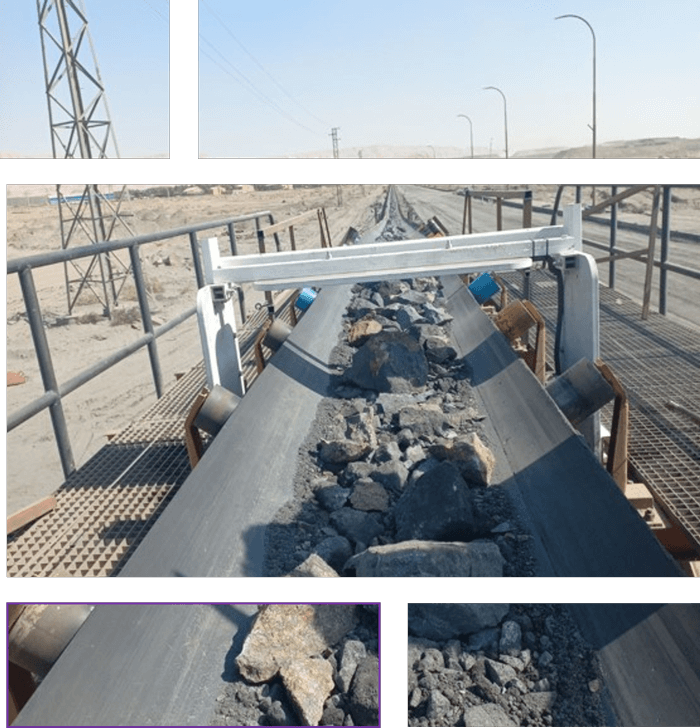
What is an Industrial Metal Detector?
The product quality of any industrial unit relies on consistent quality control throughout the entire production process. Consequently, the use of production line instrumentation and control systems, such as industrial metal detectors, is increasing daily across various production stages. This is considered vital in factories and diverse industries such as mining, food, rubber and plastics, textiles, and more.
Intelligent Board Electronics Company offers its industrial metal detector to prevent damage to processing lines and machinery, enhance product quality in the rubber and mining industries, ensure safety and hygiene in the food industry, and facilitate material separation in the recycling industry. We will examine the technical details in the following section.
Industrial Metal Detector Features
Increased productivity by minimizing production downtime
Enhanced quality of the final product
Preventing damage to machinery such as crushers, mills, etc.
Completing and optimizing the production process
- Paint Marker Integration: Optional capability to add a paint spray system to mark the exact location of detected metal.
- Metal Splice Filtering: Capable of detecting and ignoring conveyor belt metal splices/clips to prevent false stops.
- User-Friendly Interface: Simple and intuitive operation.
- Minimized False Alarms: Advanced algorithms reduce incorrect detections, saving valuable production time.
- High Thermal Stability: Reliable performance across varying temperature conditions.
- Noise Immunity: Enhanced reduction of interference from external electrical noise.
- Material Discrimination: Ability to distinguish tramp metal from mineral ores (conductive stones).
- Robust Industrial Design: Built to withstand harsh industrial environments.
- High Sensitivity: Detects even the smallest metal contaminants.
- Self-Diagnostic Capability: Automatic internal system checks for error detection.
- Rejection Process Control: Manages the metal removal/rejection sequence.
- Event Logging: Records detections, system events, and operational history.
- Real-Time Clock (RTC): Internal clock equipped with battery backup.
- Configuration Memory: Retains settings and data in non-volatile memory.
Applications of Industrial Metal Detectors
- Tire and rubber parts production
- Various mining industries
- Food and pharmaceutical industries
- Wood and chipboard industries
- Copper, Steel, Aluminum, Lead, and Zinc industries
- Ceramics, tiles, gypsum, lime, sand, brick, and pottery
- Petrochemical, recycling, and organic fertilizer industries
Our Capabilities in Providing Various Industrial Metal Detectors
We offer the possibility of ordering and manufacturing industrial metal detectors in custom sizes, tailored to different production lines with the highest quality. Key features of this device include:
- Adjustable detection sensitivity
- High resistance to severe vibrations
- Immunity to environmental noise
- Easy installation and operation without the need to cut the conveyor belt
- Various signal outputs upon detection
Metal Detectors in the Rubber & Tire Industry
In the rubber and rubber parts manufacturing industries, the presence of metal impurities causes damage to machinery and production halts, which can be very costly. Metal detectors prevent potential damage by identifying these metal contaminants. Intelligent Board Electronics Company, as a knowledge-based company, has taken a significant step in improving production in the rubber industry by manufacturing this device.
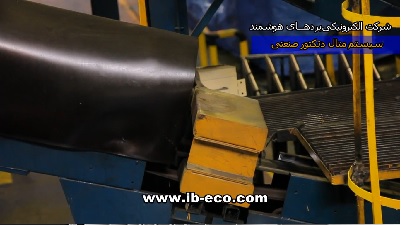
Is the use of Metal Detectors in the Tire and Rubber Industry necessary?
To minimize costs in the tire and rubber industries, protecting machinery and utilizing the maximum capacity of the production line is essential. The presence of metal impurities in raw materials or during production is a primary cause of machinery breakdown and production downtime. Metal contaminants can block extruders or get stuck behind calenders, causing deformation and dents in tires and rubber parts. Furthermore, metal impurities in products increase risks and endanger consumer safety. Therefore, using industrial metal detectors to detect metal contamination and separators to remove these impurities is essential for protecting equipment and producing standard products.
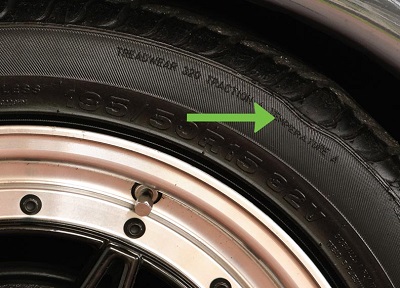
How do metal impurities appear in the rubber industry?
Metal impurities can enter production lines from various sources and cause disruptions:
- Metal pieces present in raw materials and additives.
- Wear and flaking of machinery, devices, and pipes.
- Personal items belonging to operators, such as pen tips, rings, etc.
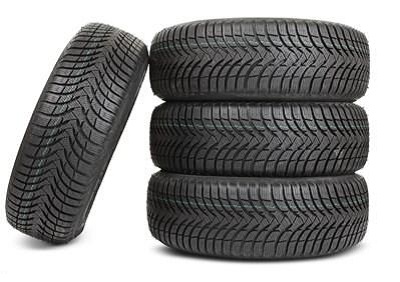
Do not confuse Industrial Metal Detectors with Magnets!
Industrial magnets are only capable of attracting magnetic metals with relatively large dimensions. However, Metal Detectors utilize modern technology to detect all types of metals, whether magnetic or non-magnetic (such as aluminum, steel, cast iron, etc.). Additionally, these metal impurities are detectable even if they are not visible, for example, if they are embedded inside a manufactured tire. Therefore, with a metal detector in the rubber industry, in addition to preventing damage to machinery, we can ensure the quality of the final product.
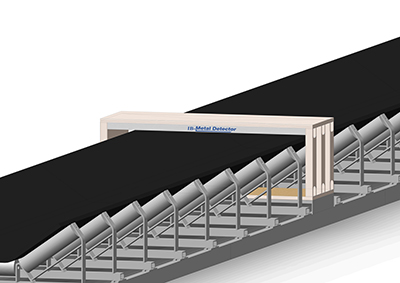
At what stages of tire and rubber production is the Metal Detector placed?
- To inspect incoming raw materials and additives.
- To inspect rubber sheets on the conveyor belt before entering extruders and calenders.
- To inspect the quality of the final product before packaging.

Metal Detectors in the Steel Industry
In the steel industry, the presence of tramp metal and impurities is always a concern. Besides reducing the final product’s quality, these metal impurities damage machinery and incur high costs. An Industrial Metal Detector is a device installed as a window/frame on the conveyor belt to prevent the passage of these tramp metals.
Necessity of using Metal Detectors in the Steel Industry
In the steel industry, if metal impurities exist in materials and enter the production line and machinery, they cause damage to crushing and material transfer systems. Installing a metal detector on the conveyor belt prevents this. The dimensions of detectable metals vary depending on the specifications of the devices and machinery and are adjustable.
Difference between Steel Industry Metal Detectors and other Industrial Metal Detectors & Magnets
Magnets in the industry are only used to attract and separate magnetic metals and cannot attract non-magnetic metals such as aluminum. In steel plants and concentrate lines, due to the magnetic nature of the materials used (Magnetite), separating metal waste from the material passing on the conveyor belt requires specialized metal detectors with high detection power. Metal detectors use modern technology to detect all types of impurities, including magnetic and non-magnetic metals
How do metal impurities appear in the steel industry?
- Metal pieces mixed in raw materials.
- Metal pieces introduced during the production process.
Advantages of Industrial Metal Detectors
- Completing the industrial and mining production chain with localized technology.
- Fast support and commitment to providing high quality in after-sales services.
- Proven performance satisfaction across various industries.
“Metal detectors are a crucial part of the contamination control program. If installed and operated correctly, and maintained well, they will be highly effective in improving product quality, reducing losses, and increasing profitability.”
Components of an Industrial Metal Detector
1. Structure (Body)
2.Control Panel (Electrical Cabinet)
Types of Industrial Metal Detectors
Industrial metal detectors are divided into three categories based on the technology used:
- Very Low Frequency (VLF)
- Pulse Induction (PI)
- Zero Voltage Transmission (ZVT)
PI Industrial Metal Detector
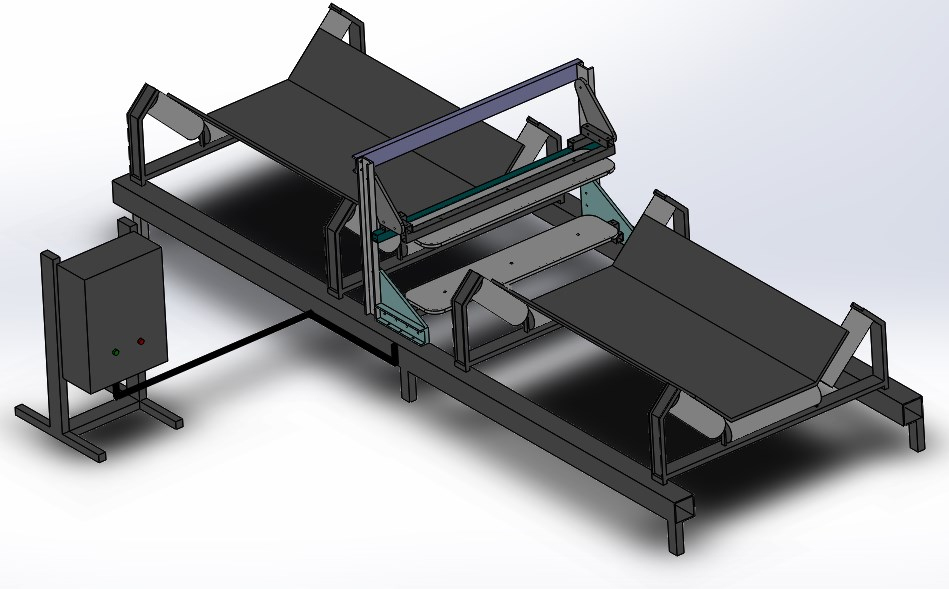
This system consists of a structure and a control panel, divided into two types: Fixed and Movable. The structure is installed on the conveyor belt, and the panel is installed next to the device for analysis and monitoring.
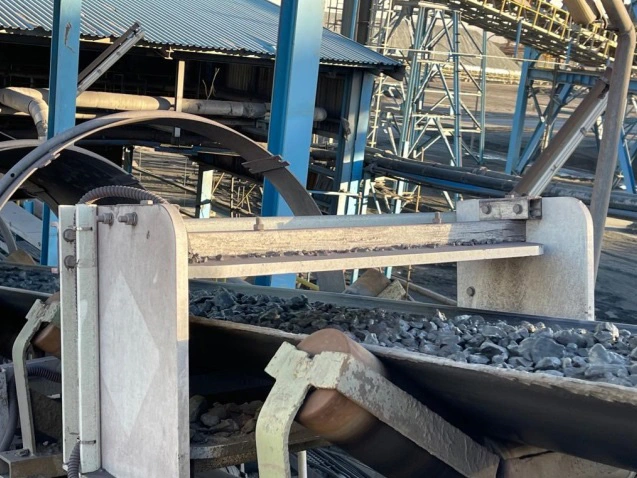
Fixed Structure PI Metal Detector

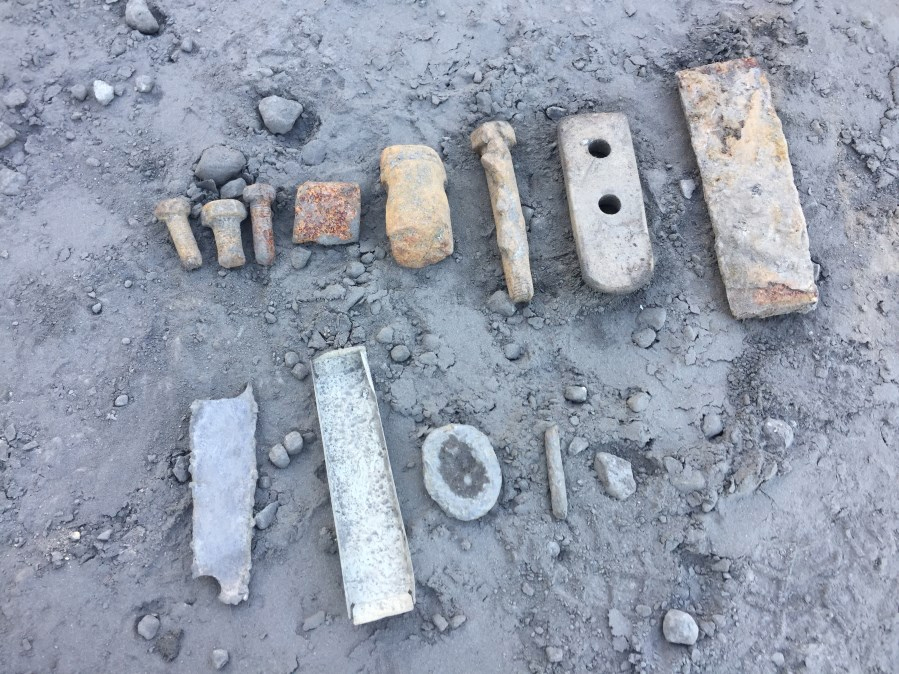
As shown in the figure, there is a top plate located above the conveyor belt acting as the device’s receiver. This plate is movable and moves to protect the coil in case of overload. Another plate is located below the conveyor belt, acting as the transmitter. To create a magnetic field capable of detecting metals on the passing conveyor, we use a pair of coils. This coil pair creates a magnetic field that detects tramp metals (such as shovel teeth, angles, channels, bolts, nuts, rebar, etc.) through changes in phase and amplitude. Depending on the client’s needs, it sends a different control signal.
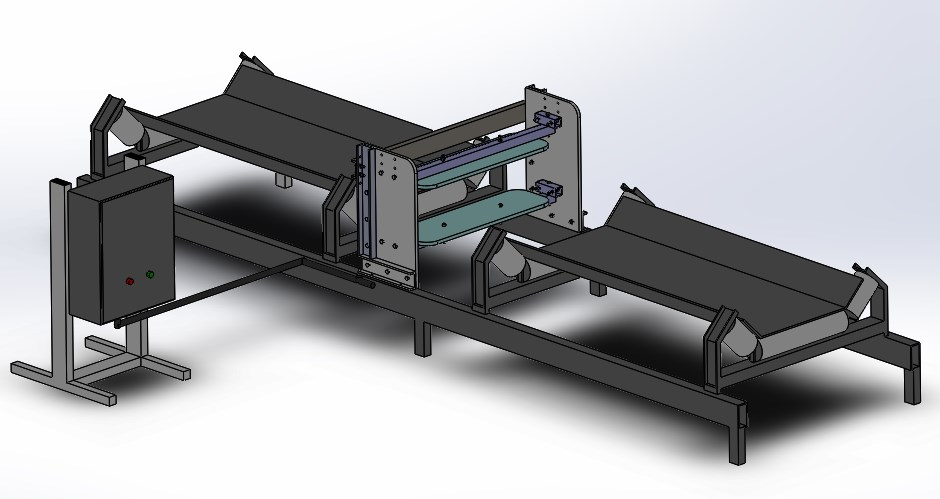
Movable Structure PI Metal Detector
This device consists of two coil plates placed on both sides of the conveyor to create a magnetic field. This model is used on granulated lines and concentrate lines at the inlet of HPGRs, Hydrocones, and Mills, offering higher sensitivity compared to other types
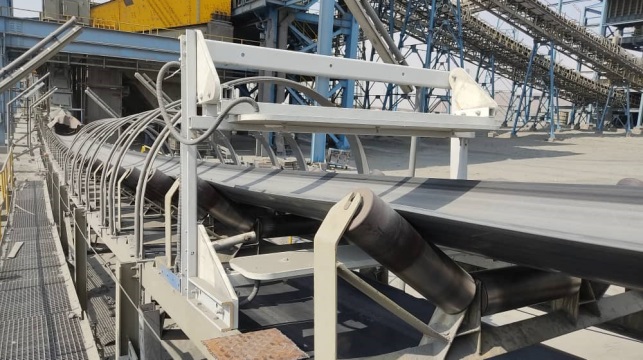
Technical specifications of industrial metal detector
Technical specification | ||
|---|---|---|
Ferrous and non-ferrous | Tramp Metal Type | |
Mineral Ore | Processed Materials | |
100-240VAC | Supply Voltage | |
50/60Hz | Supply Frequency | |
Pulse Induction | Detection Method | |
5m/s | Maximum Belt Speed | |
Isolated Outputs | Hardwire: Ready/Fault, Detect, Reject | |
Remote Reset, Clips Detector, High Pile | Isolated Inputs | |
Detection Output Signal, BEEP, Visual | Alarms | |
LCD, Bargraph, Sensitivity Potentiometer,
Off/On/Latch Switch, Detection Counter, Ready and
Detect Indicator, Reset Push Button | Panel | |
Manual, Auto | Reset Mode | |
Temperature: -10 to 55°C, Relative Humidity: 0 to
85% | Environmental
Conditions | |
500×700×250 (W×H×D) | Enclosure Dimensions | |
IP65 | IP Rating | |
Tramp Metals Detectable by Industrial Metal Detectors
VLF Industrial Metal Detector
VLF (Very Low Frequency) metal detectors utilize a low-frequency sine wave. The detection depth of these devices is typically less than one meter. VLF detectors are susceptible to interference from mineral-rich rocks, salt, iron ore, and soils with high metal content; therefore, this type of detector is generally not suitable for mineral environments.
PI (Pulse Induction) metal detectors are designed to overcome these VLF limitations. In this technology, a voltage is applied to the transmitter coil to generate a magnetic field. The field is then abruptly cut off, and during a specific period, the detector receives the signal via the receiver coil. This technology effectively neutralizes the ground effect (soil interference), making it reliable for use in mineral environments with high confidence. However, one drawback of PI technology is its lower sensitivity to very small particles compared to sine wave (VLF) detectors. Consequently, if detecting very small fragments is required, PI technology is not suitable.
IB-ECO VLF Solution
The metal detector proposed by Intelligent Board Electronics Company for industries such as rubber and food is based on VLF technology.
Design & Installation: The transmitter and receiver coils are located in two separate panels, and the receiver coil structure is differential. The device body is designed so that it can be added to the production line without the need to cut the conveyor belt.
Operating Principle: A high-power, single-frequency 40kHz sinusoidal signal is sent to the transmitter coil, providing sufficient current to generate the necessary magnetic field around the device. Initially, coil balancing is required. This means that during normal operation (with no metal impurities), the magnetic fields generated in the receiver coil neutralize each other, resulting in a receiver signal amplitude close to zero volts. When metal enters the analysis zone, the magnetic field balance is disrupted, changing the amplitude and phase of the signal received from the receiver coil.
Signal Processing (DSP): This signal is amplified and passed through multiple filters to remove noise. Finally, its amplitude and phase are measured by detectors and sent to the processor for precise analysis. Due to significant environmental noise and factors like vibration (which severely affect performance), the received signal must be carefully analyzed to eliminate environmental effects. To achieve this, the processor utilizes Digital Signal Processing (DSP) techniques and noise cancellation algorithms to ensure maximum sensitivity and minimum error.